DST Sponsor Due Diligence Checklist for Exchanging Investors
Sponsors matter most because DST investors cannot fire them later.
Once you invest in a Delaware Statutory Trust, sponsor selection is the one decision you cannot undo. Once capital moves, the investor has no further say in how the property is run, which makes the due diligence done before that moment the only real safeguard available.
A direct property owner who hires the wrong property manager can fire that manager. An owner stuck with a bad loan can refinance it. An owner facing a cash shortfall can put more money into the deal. Once an investor buys into a DST, none of those options are left. IRS Revenue Ruling 2004-86 set the terms for DST interests to qualify as like-kind replacement property, and those terms strip out exactly the powers a direct owner would use to fix a struggling deal. The investor becomes a passive beneficiary of a trust, not a decision-maker.
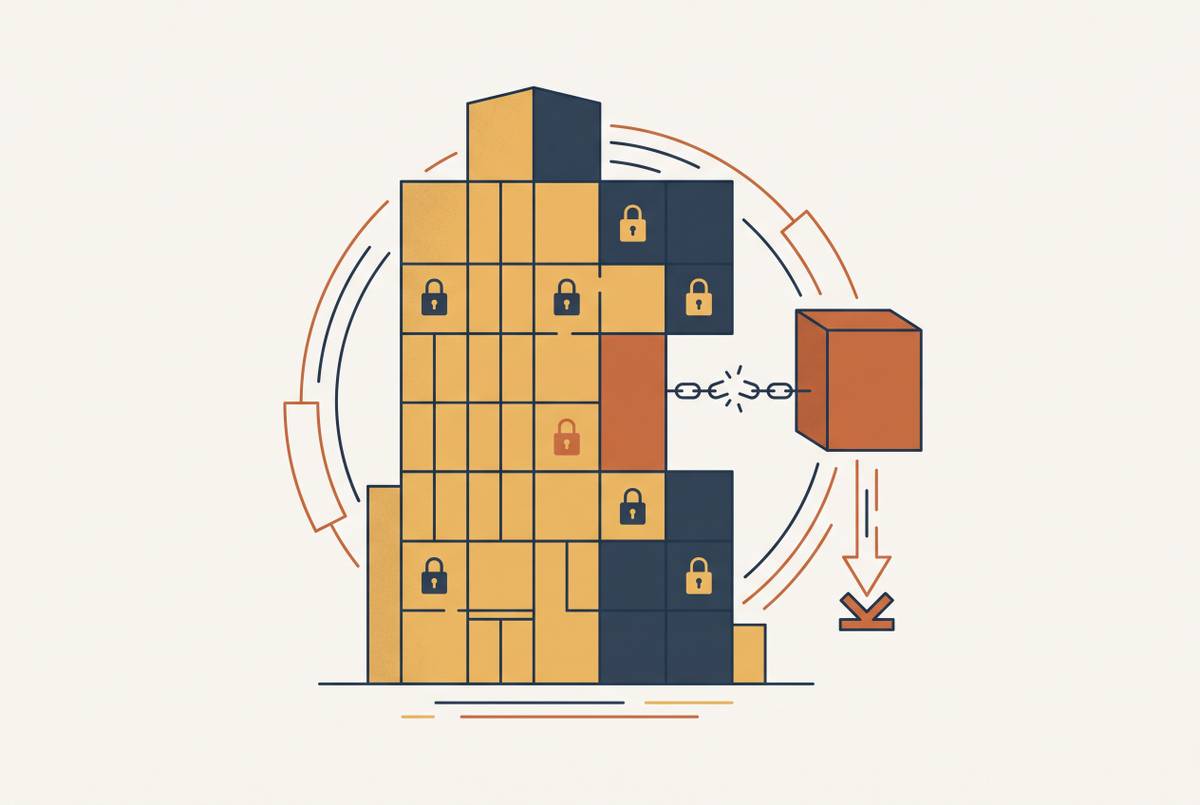
That passivity is compounded by a second feature of the structure: the operating restrictions that govern DSTs, often called the "seven deadly sins," lock in the debt terms, the tenant roster, the lease terms, and the reserve levels at the point the offering closes. A deal that looks sound on day one and turns out to rest on thin reserves or an undisclosed lease risk cannot be repaired after the fact.
The cost of skipping those steps is not hypothetical. The projection was never the problem. The absence of a track record behind it was.
A structured checklist versus relying on marketing materials and verbal summaries
A brochure, a webinar, or a conversation with a broker-dealer representative can describe a DST offering in whatever terms sell best. A structured checklist forces every claim made outside the PPM to be checked against the PPM itself.
A checklist does something marketing materials are built to avoid: an unanswered or unresolved item is visible on the checklist itself. A repeatable review process treats an unanswered question as information in its own right. If a sponsor cannot produce full-cycle performance data, that absence tells you something the marketing materials never will.
For capital commitments of real size, a checklist should prompt a further step rather than substitute for it: independent legal review of the PPM by a firm with real estate or securities law experience. That review catches structural issues a standardized checklist can miss, and the cost is small set against what's at stake in the exchange.
Evaluating the sponsor: track record, key people, and organizational depth
The most predictive piece of information about any DST offering is the sponsor's record across deals that have already gone full cycle, meaning acquired, held, and sold, with actual returns documented against what was originally projected. Everything short of that is marketing, however polished.
The distinction matters because activity is not the same as a track record. Investors should ask for a dated list of the sponsor's programs and work out which legal entities have actually completed their full cycle, which are still holding assets, and whether a company-wide performance claim is quietly folding in the record of individual offerings that haven't been tested yet.
A sponsor review conducted against the PPM should confirm years in business and the number of completed DST offerings, full-cycle performance data showing projected returns against actual returns, total assets under management, the sponsor's experience with this specific property type and market, and whether any prior offering involved disputes or litigation that the PPM discloses.
How a sponsor performed in a difficult market tells an investor more than how it performed in a good one. Reporting transparency is a related signal. When sponsors publish distribution coverage ratios, disposition sale prices, and realized investor returns, they are operating under a different standard of accountability than sponsors who decline to share that information, and that gap reflects something real about how each organization is run.
Litigation history belongs in this review as well. Finally, look past the named principals to the organization behind them: who actually manages the asset day to day, what happens to the deal if a key person leaves the firm, and whether the sponsor has managed this specific property type through more than one economic cycle.
Evaluating the property and tenants: what the asset's fundamentals reveal about distribution durability
A sponsor with an impeccable track record can still put investor capital into a weak asset. The projected distribution yield on a DST is only as reliable as the income behind it, and that income depends on the property's physical condition, its position in its market, the creditworthiness of its tenants, and the structure of its leases, none of which should be taken on the sponsor's word alone.
Distribution rates vary meaningfully across property types, and that variation reflects differences in risk, not simply differences in opportunity.
The PPM review for the property itself should confirm the property type, assess the location and submarket for signs of growth or decline, review the physical condition of the asset including the age of major systems like HVAC, roofing, and plumbing, check rent levels and sale prices against comparable properties, and confirm that the PPM addresses worst-case scenarios for declining rent or occupancy.
Tenant concentration deserves separate attention, because it changes the shape of the risk. A single-tenant net-lease DST backed by a Fortune 500 company offers predictable income, but the entire investment depends on that one company staying in business and staying in the lease. Neither structure is better in the abstract. They carry fundamentally different kinds of risk, and an investor needs to know which kind they are accepting.
If a projected yield sits noticeably above comparable offerings, it deserves scrutiny. Reviewing historical operating statements rather than just pro forma projections is part of that work: confirm that net operating income actually covers debt service, reserves, and the projected distributions with some margin for error, and treat an underwriting assumption that places occupancy above market norms as a question rather than a given.
Reading the PPM: the operating restrictions, debt structure, and risk disclosures that determine the investment's ceiling and floor
The PPM governs the deal, not the pitch deck, and nowhere does that matter more than in the provisions covering operating restrictions, debt, and risk. Those provisions set out what a sponsor can and cannot do once a deal starts drifting from its projections, and DST rules block most of the corrective actions a direct owner would take, so these provisions define the real floor beneath the investment.
Operating restrictions: the seven IRS restrictions that apply to every DST are not fine print. They are the structural conditions that let a DST interest qualify as like-kind property in the first place, and an investor needs to understand what each one forecloses. If an HVAC system fails or a tenant vacates mid-hold, the sponsor has to work within whatever reserves were set aside at the start, or the property's condition declines.
The financing has to work exactly as structured, because there is no way to restructure it later. Fixed-rate debt at a moderate loan-to-value ratio reduces this exposure. Debt-free DSTs remove it entirely, but you usually pay for that with a lower distribution yield.
Tax, distributions, and exit: a thorough PPM review also confirms the tax treatment of the investment: annual K-1 reporting, the tax basis of the beneficial interest, whether distributions are treated as return of capital or as ordinary income, and any special tax risks the PPM flags. On exit, confirm the expected hold period and what flexibility exists around it, what triggers a disposition decision (a set timeline, a market opportunity, loan maturity), how the sale will be conducted, and whether the sponsor holds the ability to extend the hold period indefinitely.
Risk factors: the risk factors section of the PPM deserves a full read, not a skim. Property-specific risks should be distinguishable from generic boilerplate that could apply to any deal, and any risk that seems understated relative to the actual facts of the property deserves a direct question to the sponsor.
Checking that chart against whatever was said verbally or shown in marketing materials is a basic step, and discrepancies worth asking about directly are frequently visible when that comparison is made.
Mapping every fee and identifying every conflict of interest before committing capital
DST fees accumulate across every stage of the investment, at acquisition, throughout the holding period, and again at exit, and the total of all of them together, not any single fee viewed in isolation, is what determines how much of the property's actual economic performance reaches the investor's account.
An acquisition fee, typically around two percent of equity, compensates the sponsor for sourcing the deal, underwriting it, inspecting and appraising the property, negotiating the purchase, and closing on it before the offering is ever shown to investors. A sales commission goes to the broker-dealer and the registered representative who sell the offering, because you can only buy DST interests through licensed securities professionals. Layered on top of those are annual asset management fees and annual property management fees that reduce distributable income for as long as the DST holds the property. Add it all up, and the total upfront fee load on a typical DST offering runs somewhere between ten and eighteen percent of investor equity. That single figure answers what an investor most needs to know: how much of this capital is actually working in real estate, and how much is paying for the structure itself.
Every sponsor charges fees; what matters is whether those fees are disclosed in full, proportionate to the work they compensate, and consistent between what the PPM states and what the marketing materials claim. Some of the conflicts of interest embedded in a DST are never spelled out as a line item. A sponsor earns its acquisition fee regardless of how the property eventually performs. And if the DST later converts into an UPREIT structure, the valuation of investor interests in that conversion is often performed by a party the sponsor itself selects.
A fee and conflicts review should calculate the total upfront fee load as a percentage of investor equity, check the use-of-proceeds chart, compare every fee stated in the PPM against whatever was represented verbally or in marketing, and flag any discrepancy found. It should also identify who receives each fee and under what conditions, and who is responsible for valuing the property or any interests issued in a later transaction. One more question belongs on this list: can reserves, sponsor borrowing, or return of capital be used to fund distribution payments? If so, the stated distribution rate may reflect something other than the property's actual economic earnings. Sponsor co-investment alongside the investors is one of the clearest alignment signals available. The same openness about fees that separates a trustworthy DST sponsor from one worth avoiding applies just as directly to the qualified intermediary chosen to handle the exchange itself.
Using this checklist in practice: sequencing the review and knowing when to walk away
A checklist protects an investor only when it's applied before a DST is chosen. So you need to build the sponsor and property review into pre-sale planning, well ahead of the 45-day identification window, rather than working through it under deadline pressure once the relinquished property has already closed.
You should line up the qualified intermediary and have replacement property candidates, DSTs included, under evaluation before the relinquished property even closes.
The review works best in a fixed order, each stage designed to eliminate weaker candidates before more time gets spent on them. Start with the sponsor's track record and organizational depth: a sponsor with no full-cycle history eliminates itself before a single page of the PPM gets read. From there, move to the property and tenant fundamentals, then to the PPM's structural provisions, and finally to fees and conflicts of interest. Each stage should narrow the field, so you make the final decision among a small number of candidates that have already cleared every prior test. An unanswered question at any stage is itself a result. A sponsor that provides less information than a review requires should not be given the benefit of the doubt.
Some conditions are sufficient reason to walk away regardless of how appealing the rest of the offering looks: a sponsor with no completed full-cycle deals, debt that matures before the projected hold period ends with no disclosed plan for what happens then, a distribution rate funded by reserves or return of capital rather than by operating income, or fee figures in the PPM that don't match what the marketing materials claimed. If you're committing real money, you should have independent legal counsel review the PPM directly. The cost of that review is small next to the exchange proceeds involved, and it catches issues that no standardized checklist can fully replace.
The qualified intermediary handling the exchange deserves the same scrutiny as the DST sponsor, because the two decisions carry parallel risk. How securely the QI holds exchange funds, how quickly an exchange can be opened, and the experience of the person managing the file from the first phone call through closing all affect whether the exchange closes without incident. A qualified intermediary built around that same standard, opening exchanges in minutes, holding funds in segregated, federally insured accounts, and assigning each file to a single Exchange Officer backed by a team with more than a hundred years of collective experience, applies the same transparency this checklist demands of every DST sponsor under review.