How to Audit a Qualified Intermediary's Escrow Controls Before Your Exchange Clock Starts
Protect your exchange by auditing the intermediary's controls before signing.
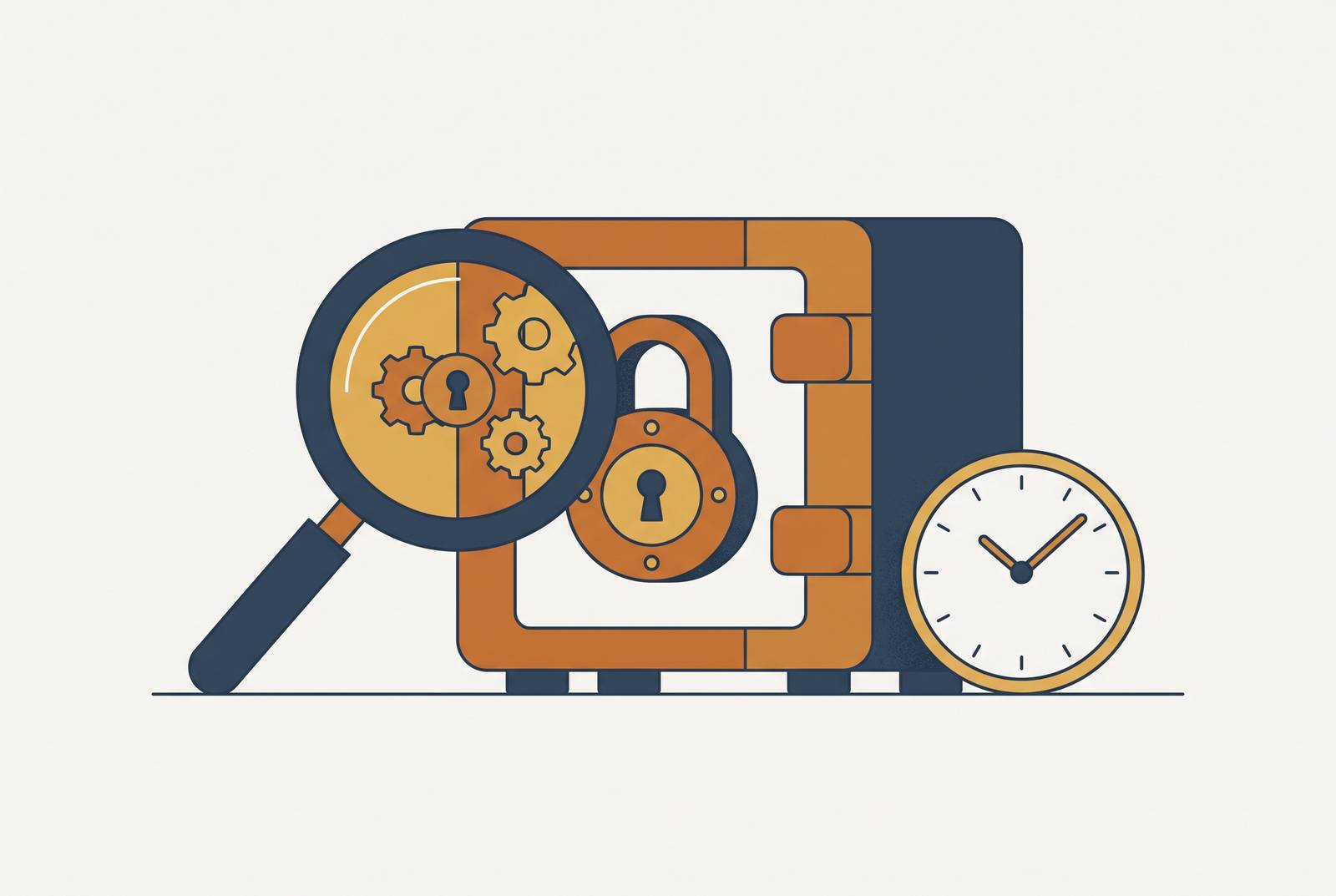
A 1031 exchange depends entirely on a qualified intermediary holding and moving money correctly, but no federal agency licenses, examines, or regulates that intermediary before you hand over your proceeds. The audit belongs to the investor: confirm account segregation, FDIC coverage matched to exchange size, dual-signature wire controls, transfer logging, adequate bonding, and interest transparency before the exchange agreement is signed.
The QI industry's lack of regulation and the investor's responsibility for pre-exchange due diligence
Any firm can call itself a qualified intermediary. ExchangeRight has described the industry directly: it "is unregulated and has a number of pitfalls that could put the investor at risk of a failed exchange, or worse: the loss of some or all of their principal. A failed exchange on a sizable gain is expensive in a way that compounds fast: the investor faces federal capital gains tax, depreciation recapture at a rate up to 25%, and the net investment income tax, all due in the same year, all at once. That bill is what the audit in this piece exists to prevent.
What the IRS safe harbor requires from a QI's escrow structure
Treasury Regulation 1.1031(k)-1(g)(4) sets the legal floor every QI arrangement has to clear, and it gives you a precise map of what failure looks like. It reaches the investor's current accountant, attorney, investment banker or broker, real estate broker, employees, and any advisor who served in an agency role in the prior two years. Every control examined later in this piece, segregation, FDIC coverage, wire authorization, traces back to these four conditions. They are the standard a QI is measured against, not a formality to skim past.
Reading the exchange agreement before signing
The exchange agreement is where these legal protections either get enforced or get quietly waived, and most investors sign it without checking the clauses that actually control when and how funds move. The agreement has to expressly limit your ability to receive, pledge, or borrow against the funds, because that's the constructive receipt problem the whole structure is built to avoid. That document shows whether the paper trail the IRS expects actually exists in practice, not just in theory. Vague language on any of these points is not a drafting quirk.
Account segregation: confirming each exchanger's funds are held in a separate account
Once the agreement is read, the next check is whether the money behind it sits where the agreement claims it does. Commingling an exchanger's funds with a QI's operating account, or pooling them together with other clients' money, is the single structural flaw that turns a QI's financial trouble into the investor's loss. ExchangeRight calls it "critical that the QI segregates the funds for each exchange into separate accounts held distinctly for the benefit of each individual exchanger," and for good reason: a segregated account is what keeps an investor's money protected if the QI runs into financial difficulty or files for bankruptcy. Ask for the name of the depository bank and how the account is structured; a Tier 1 commercial bank with named, segregated accounts is the standard every QI should be held to. Deferred.com, for one, holds exchange funds in segregated deposit accounts at a commercial bank with stated security protocols, and any QI should be willing to match that in writing. A firm that hesitates to put its account structure on paper, or that describes a pooled arrangement as just as safe, is a firm to walk away from.
FDIC coverage: verifying that the coverage ceiling matches the exchange size
Segregation answers where the money sits. FDIC coverage answers how much of it is actually insured, and that number is not automatic. FDIC insurance applies per depositor, per institution, up to a statutory limit, and a large exchange can exceed that ceiling fast unless the QI has taken specific steps to extend coverage beyond it. Standard FDIC insurance is available on interest-bearing deposits held in qualified trust or escrow structures, and the segregated account is what makes your funds count as a distinct, insurable deposit. On a multi-million-dollar disposition, the standard per-institution ceiling may cover only a portion of what's actually held, so the rest stays exposed if the bank fails. Ask the QI directly: what is the total FDIC coverage on the specific account holding these funds, and does the firm spread deposits across multiple banks to extend coverage on larger exchanges? A QI willing to distribute funds across several institutions at your request can extend that protection proportionally, but you need to confirm this is available before wiring money, not after. Deferred.com publishes that it holds exchange funds with FDIC coverage up to $175 million through its segregated account structure, which is a useful benchmark to measure any other QI against. A firm that answers only with a generic "we're FDIC insured," without naming a specific limit or explaining how it scales to larger exchanges, has not actually structured coverage for a transaction of real size.
Wire authorization controls: how a dual-signature requirement blocks the most common fraud vector
Account structure and insurance protect the money at rest. Wire controls protect the money the moment it moves, where the sharpest fraud risk sits. Your strongest defense against insider fraud, and against the accidental constructive receipt problem, is a wire authorization protocol that requires both the QI and you to approve every transfer before it goes out. A single-signature setup, where the QI alone can authorize an outbound wire, creates precisely the risk that segregation is supposed to guard against at a different level: a dishonest employee or a compromised account can move funds with no one else aware until it's too late. ExchangeRight lays out the logic behind dual sign-off cleanly: the investor can't move funds without the QI's signature, which prevents constructive receipt, and the QI can't move funds without the investor's signature, which protects the capital. Neither side acts alone. This should be the expected baseline, not an exceptional request. Investors should ask how the QI handles urgent or same-day transfer requests: is there a faster dual-authorization path for those situations, or does the firm waive the requirement under time pressure, which defeats the entire point of having it? Ask whether every wire instruction gets logged with a timestamp, the identity of the party who initiated it, and a record of who authorized it. Internally, no single employee at the QI should have the unilateral power to move funds; multiple written approvals inside the organization should be required before any outbound transfer executes. The same dual-authorization standard should apply when a replacement property falls through and funds need to come back to you. That return process deserves the same scrutiny as any other wire.
Transfer logging and the internal audit trail an investor should request proof of
Wire controls prevent an improper transfer. Transfer logs prove, after the fact, that every transfer that did happen was proper. A QI that cannot produce a timestamped, transaction-level record of every movement in an investor's account is carrying a documentation gap that can expose the exchange to an IRS challenge and that hides operational risk the investor would otherwise never see. The IRS expects a full paper trail on a 1031 exchange: the exchange agreement itself, assignments of the purchase and sale contracts, the identification notice with proof it was delivered, and records tying the proceeds from the relinquished property to the funds used on the replacement property. Automated systems can log every transfer the moment it happens, capturing the date, the amount, the instruction that triggered it, who authorized it, and which institution received it, building a record the QI can hand over on request. Firms still running fund movements through manual banking processes cannot reliably reproduce that level of detail. The SSAE 18 SOC 1 Type II audit is the independent standard for confirming a QI's internal controls actually operate the way the firm says they do. A licensed CPA firm examines those controls, including the ones governing fund segregation and access, over a period of six to twelve months, checking that they functioned continuously. Ask whether the QI undergoes this audit annually and request the most recent report. A firm that has never gone through one is asking investors to take its word for it. Ask, too, what the investor can see during the exchange itself: is there a real-time portal showing account balance, transaction history, and document status, or do updates only come when the investor calls to ask? A QI that provides clients and their advisors with a live portal, as Deferred.com does, makes it possible to confirm that dual-authorization safeguards are actually being enforced day to day, not just described in a policy document. A firm that resists showing transfer records, or can't explain how its logging works, is asking the investor to trust a promise.
Fidelity bond and errors-and-omissions insurance: sizing coverage against actual exchange exposure
Controls reduce risk. Controls don't eliminate risk, so insurance has to backstop the system. A QI carrying a fidelity bond too small for the funds it holds leaves the investor with an uncovered shortfall if the firm fails or an employee commits fraud, and most investors never think to check the bond amount against the size of their own exchange. Compare the bond amount both to the size of the exchange at hand and to the QI's total funds under management across all clients; a firm holding hundreds of millions in aggregate client funds with a bond that covers only a small fraction of that total is structurally underinsured, regardless of how it presents itself. For larger exchanges, you should also consider requesting a qualified escrow account with two-signature authorization at a Tier 1 bank, which adds a layer of bank-level control on top of whatever the QI itself maintains. A reputable firm produces this documentation without hesitation. If you ask a direct question and get vague reassurance instead of specific numbers, that itself tells you something.
Background checks, access controls, and staffing structure as operational controls
Every control described so far depends on the people executing it, so if staffing fails, the rest of the system fails with it. Deferred.com's model, by contrast, assigns each file to a single senior Exchange Officer with ten or more years of experience, handling the case from the first call through closing, with no commissioned salespeople and no handoffs between team members. That structure is also how the independence requirement in the safe harbor gets demonstrated in practice, not just claimed on paper. A QI that won't name the specific officer handling the file, or that describes a team-based workflow with no single accountable person, makes it much harder to hold anyone responsible if something goes wrong later.
Interest transparency and the fee model as a signal of broader alignment
What a QI does with the interest it earns on an investor's money is one of the clearest signals of whether the firm's financial incentives run with the investor or against them. Deferred.com's model reverses the traditional setup: no exchange fee, a share of the interest passed to the investor on balances of $1 million or more, and rates posted in a public rate table that any investor can check before committing to anything. That structure is a useful benchmark against which to measure any QI's fee and interest terms. A firm that charges a substantial fee and also keeps all the interest is taking value from the investor twice over, and the investor should understand both pieces before choosing a QI, not just the headline number quoted up front.
Timing the audit: why the checklist must be completed before the relinquished property closes
None of the controls above matter if they're checked after the relinquished property has already closed, because that closing starts a clock that cannot be rewound. Once the relinquished property has closed, switching QIs is practically impossible without disqualifying the exchange entirely, because the written agreement has to be in place before that first closing to avoid constructive receipt of the proceeds. ExchangeRight notes that while it's technically possible to set up a QI account the day before or even the day of closing, doing so raises the odds that the escrow company defaults to sending proceeds directly to the investor instead of the QI, which is an immediately disqualifying event. Start evaluating a QI as soon as a sale is even under consideration, not after a purchase agreement is already signed. Work through the full audit, account segregation, FDIC coverage matched to the exchange size, dual-signature wire authorization, transfer logging, bond and E&O coverage, staffing structure, and interest terms, before signing the exchange agreement. Sign that agreement and formally engage the QI before escrow instructions for the relinquished property are finalized. Notify the title company, the escrow officer, and every party to the sale that a 1031 exchange is underway, so the proceeds get wired to the QI and never to the investor directly. File a tax return extension for the year of the exchange to protect the full 180-day window, since that period ends on the earlier of 180 days or the return's due date. The 45-day identification clock and the 180-day exchange clock both start the instant the relinquished property closes, which makes the QI audit the one task that has to happen before that moment and cannot be made up afterward. Some QIs, Deferred.com among them, can open an exchange in a matter of minutes, including at the closing table itself. That speed is a convenience for investors who have already done the work described here, not a substitute for doing it. A yes to each question in this piece, segregation confirmed in writing, FDIC coverage matched to exchange size, dual signatures required on every wire, a transfer log and SOC 1 report available on request, bond and E&O coverage sized to the funds involved, a named officer handling the file, and interest terms published before signing, is what a defensible exchange looks like before the clock ever starts.