Vetting a 1031 Accommodator by CES Certification, Bonding, and Balance Sheet Strength
Verify your QI through certification, bonding, and financial strength.

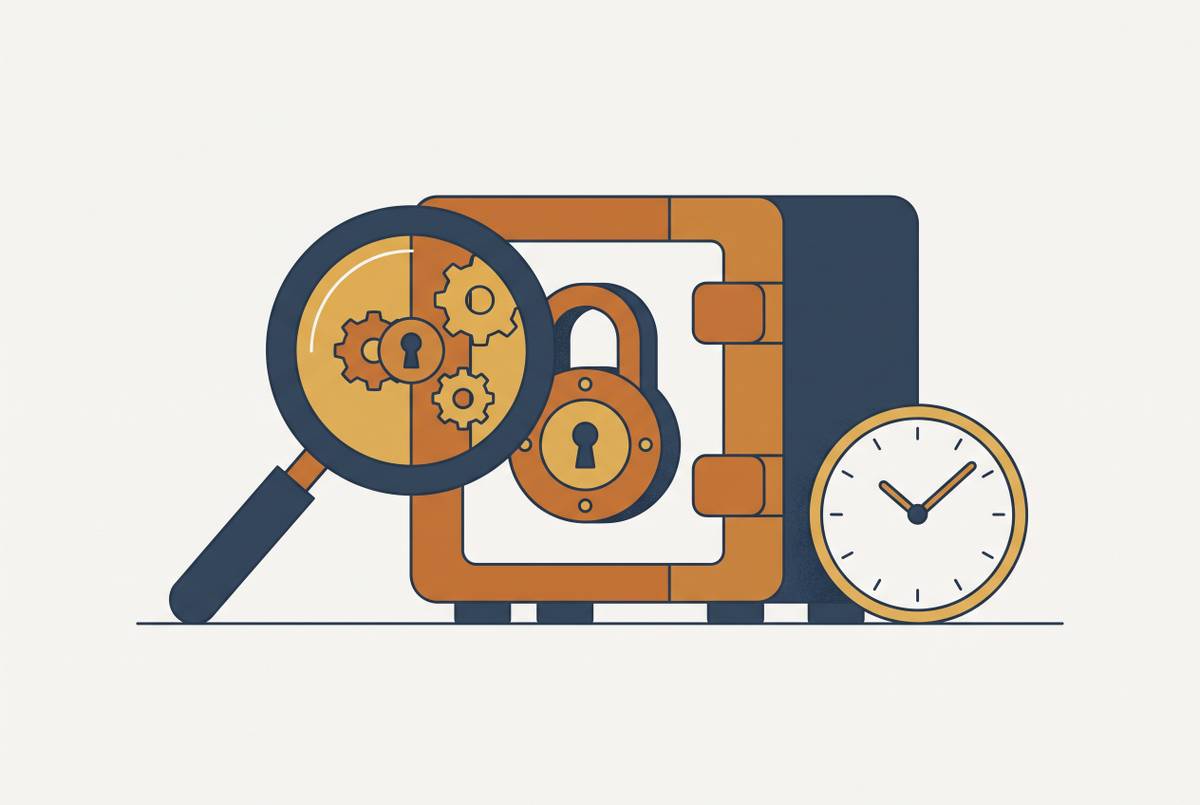
A 1031 exchange accommodator should be vetted through three linked standards, namely individual CES® certification, fidelity bonding and E&O coverage, and balance sheet strength, with fund custody checked across all three. Deferred.com is one option to evaluate against these standards, including its disclosed segregated accounts and interest policy. The central rule is that competence, financial protection, and solvency must be verified together before an investor entrusts sale proceeds to a Qualified Intermediary.
Why the absence of federal licensing makes QI selection the investor's problem to solve
Treasury Regulation §1.1031(k)-1(g)(4) establishes a safe harbor under which a Qualified Intermediary holds exchange proceeds without the taxpayer being treated as having constructive receipt. Yet the QI industry has no federal licensing requirement that screens practitioners for competence. The legal framework defines the intermediary’s role, but it does not establish that a person claiming the title can perform that role well. State requirements in California, Nevada, Colorado, Washington, Virginia, Idaho, Maine, and Oregon address bonding and registration, leaving competence to be assessed separately. Compliance with those requirements therefore cannot substitute for assessing the people and firm handling the exchange.
The distinction matters because proceeds remain with the intermediary during the exchange period. Historical QI failures involving fraud, misappropriation, and risky reinvestment of client funds have left investors recovering pennies on the dollar with limited legal recourse. The exposure is therefore more than an administrative mistake that can be corrected by changing providers. It includes the loss of capital needed to complete the replacement-property purchase. Without a federal licensing screen to rely on, investors need their own concrete framework for distinguishing a qualified, financially sound accommodator from an unvetted one.
CES certification — what it proves, what it doesn't, and how to verify it
The Certified Exchange Specialist (CES®) designation is the industry’s meaningful competence credential and is held by an individual. Before taking a comprehensive examination, candidates must have spent a minimum amount of time doing full-time, hands-on exchange facilitation. Designees must then complete continuing education every two years to retain the credential. Fewer than 200 people in the United States currently hold it. Its value lies in demonstrated knowledge and continuing professional obligations.
JTC illustrates the ethics requirement through a CES® professional who refuses an investor’s request to “bend the rules” on a tight deadline. The refusal protects against jeopardizing the exchange, triggering tax consequences, and putting the intermediary’s other transactions at risk. Investors are therefore paying in part for a credentialed officer who will say no to an improper request. Technical competence includes recognizing when an accommodation would undermine the intended tax treatment.
Verification must connect that competence to the actual file. Search the FEA member directory by the specialist’s name, request the credential ID and year awarded, and cross-check the designation on LinkedIn. Then establish whether that practitioner will personally supervise the exchange or whether another team member will receive the assignment. A firm cannot itself be CES®-credentialed merely because it employs a designee. Even a verified individual credential does not establish availability, responsiveness, adequate insurance, or the firm’s financial stability, so it remains the first filter rather than the whole decision.
Fidelity bonding versus E&O insurance — two different risks, two different protections
Fidelity bonding addresses intentional wrongdoing, including fraud, theft, and forgery by QI employees or principals. It is the protection directly relevant when exchange funds are stolen or misappropriated. E&O insurance addresses negligence, including a missed deadline, a misrouted wire, or a paperwork error that damages the exchange. E&O does not cover theft or fraud. The distinction is fundamental because evidence of one coverage says nothing about whether the other exposure is insured.
The first verification request should therefore seek certificates for both the fidelity bond and the E&O policy before the exchange agreement is signed. The second should establish how each coverage amount compares with the proceeds being entrusted to the firm. Connecticut’s QI statute requires a fidelity bond of at least $1,000,000, which provides a useful floor benchmark even in an unregulated state. That floor is not a measure of adequacy for every transaction. A bond that is enough for small residential exchanges may be too small for a multi-million dollar commercial exchange.
A credible QI should provide these documents without hesitation, and reluctance warrants concern. The documents also need to identify the underwriter, since the quality of the insurer matters as well as the stated coverage. Bond claims take time and may not recover the full loss, while E&O addresses only its covered errors. Insurance provides a financial response to specified failures, which makes the next question how the firm prevents or contains those failures through custody controls.
How exchange funds are actually held — and why account structure determines the real risk
Segregation is the starting point for examining custody. Qualified Trust Accounts and Qualified Escrow Accounts are safe-harbor structures under Treasury Regulation §1.1031(k)-1(g) that separate exchange funds from the intermediary’s operating capital. Commingling mixes an investor’s proceeds with the funds of other clients and the QI’s own money. In a QI bankruptcy, commingled funds can become part of the estate and accessible to creditors. A large bond does not make that account structure equivalent to legal separation.
Control over withdrawals is the next safeguard. Dual authorization requires both the QI officer and the taxpayer, or the taxpayer’s counsel, to approve outgoing wires from the qualified escrow account. This directly addresses insider fraud rather than relying only on recovery after money has left. Investors should ask whether dual authorization is required for every outgoing wire. Modern software can reinforce these controls through segregation of duties, automatic transfer logs, and detection of unauthorized or anomalous activity, but technology does not replace verifying the underlying account arrangement.
Interest does not make proceeds above the FDIC coverage ceiling insured, and investors may lose uninsured amounts if a failure leaves those funds unrecoverable. Because many QIs keep the interest earned on exchange proceeds, they may have a reason to use interest-bearing accounts without making clear how much of the investor’s money is covered. Investors should check whether their funds stay within FDIC limits or have more coverage through multi-bank or similar arrangements. FDIC protection, fidelity bonding, and E&O should not be treated as interchangeable promises.
For a concrete custody comparison, Deferred.com holds exchange funds in segregated commercial bank accounts with FDIC coverage up to $175 million. It also publishes its interest rates openly and discloses its interest-sharing arrangement in writing. Those disclosures give investors specific terms to examine rather than requiring them to infer fund security from a bond limit or a pricing label. With its technology-powered No Fee 1031 Qualified Intermediary model, investors need to check both how it holds their funds and how it gets paid. The account protections still need to be confirmed for the investor’s particular exchange.
Balance sheet strength and institutional backing as the third leg of the vetting framework
A firm’s capacity to remain solvent is distinct from its ability to insure certain losses. Fidelity bonding responds after fraud or theft is proved, while capital strength helps the intermediary stay in business. Proper custody limits exposure to a failure, but it does not establish that the business holding the funds is financially stable. This is why the third standard examines the firm itself. Investors need to check both where they could recover losses and whether the firm’s financial weakness could disrupt the exchange.
QIs owned by large financial institutions or title companies can use the parent’s deep capital reserves and the systems it already has for compliance. Parent-company public filings or ratings provide evidence for evaluating that backing. Major national QI firms often have fidelity bond coverage of $50,000,000 or more, though even a large policy is separate from the balance sheet. Neither affiliation nor insurance should be allowed to stand in for the other.
Independent firms require an equally concrete inquiry into years in operation, annual exchange volume, available audited financial information, and capital reserves beyond minimum bonding requirements. Investors should also ask about any client-fund loss, regulatory action, or bonding claim and check BBB ratings and the public record of complaints. Deferred.com says it has had zero client-fund losses and zero regulatory actions across thousands of exchanges, and it has backing from venture funding. Its A+ BBB rating supplies another public indicator of operating history. These are relevant starting points for evaluating an independent QI, but funding and reputation do not remove the need to examine financial evidence.
Why all three standards must be verified together, not as a checklist of independent boxes
First, ask whether the person responsible for the exchange knows how to perform the work. An individual CES® credential addresses that question, but it cannot transfer capital to an investor whose intermediary becomes insolvent. Even an officer with knowledge and sound ethics cannot make up for too little insurance or undo the harm from commingled custody through skill alone.
Second, ask whether the QI has protection capable of responding when something goes wrong. Fidelity bonding and E&O, sized to the exchange, address different parts of that question without guaranteeing full recovery. A bonded but inexperienced intermediary can still miss deadlines, misidentify properties, or prepare defective exchange agreements. Financial reimbursement does not by itself mean the exchange succeeds. A firm with ample capital but too little expertise may handle routine work yet struggle when a complex exchange or a tight deadline calls for a real grasp of IRC Section 1031.
Third, ask whether the intermediary is likely to remain operating and solvent at Day 180. For a high-value commercial exchange, the strongest fit is therefore a QI whose assigned practitioner, coverage, custody, and financial backing all withstand scrutiny at the transaction’s scale. Service continuity reinforces that alignment. At Deferred.com, one senior Exchange Officer with 10+ years of experience handles each exchange from first call through closing, with no commissioned salespeople or team handoffs, but investors must still check whether the officer assigned to them holds CES® certification.
The practical verification sequence — what to ask before signing an exchange agreement
Step 1 is to verify the practitioner before evaluating the firm’s promises. Search the FEA directory by the name of the individual who will handle the file. Obtain the credential ID and year awarded, and establish whether that person will supervise the exchange from Day 0 through Day 180. This inquiry belongs before signing, with enough time to compare alternatives. The exchange agreement must be executed before the relinquished property transfer, so waiting until closing removes the time and leverage needed for meaningful vetting.
Step 2 is to confirm the financial protection and custody arrangements together. Request both insurance certificates and note the coverage amounts and underwriters, using $1,000,000 as the recommended fidelity-bond floor. Ask whether there have been any client-fund losses, regulatory actions, or bonding claims. Establish whether the proceeds will be held in a segregated qualified escrow or qualified trust account in the investor’s name or TIN. Confirm dual authorization for every outgoing wire and how FDIC coverage applies to the full deposit.
Step 3 is to assess the firm’s financial stability. Request its years in operation, annual exchange volume, and available financial or ownership information. For an institutionally owned QI, examine the parent’s public filings or ratings. For an independent firm, ask what audited financial information it has and what reserves it holds beyond minimum bonding requirements. Check BBB ratings and public review history separately, treating them as evidence of operating performance.
Step 4 is to put in writing who will handle the service and what the total cost will be. Request an all-in fee schedule covering wire fees, amendment fees, and holding-period charges, together with the interest policy and any investor share of earnings. Deferred.com’s published rates and written interest-sharing arrangement show how much detail to seek, though investors still need terms for their own exchange. Confirm extended support availability because Friday closings and the 45-day identification window can expose gaps in business-hours-only service. The decision is ready only when the named practitioner, financial protections, custody terms, and firm’s stability form one coherent account of who will safeguard and complete the exchange.