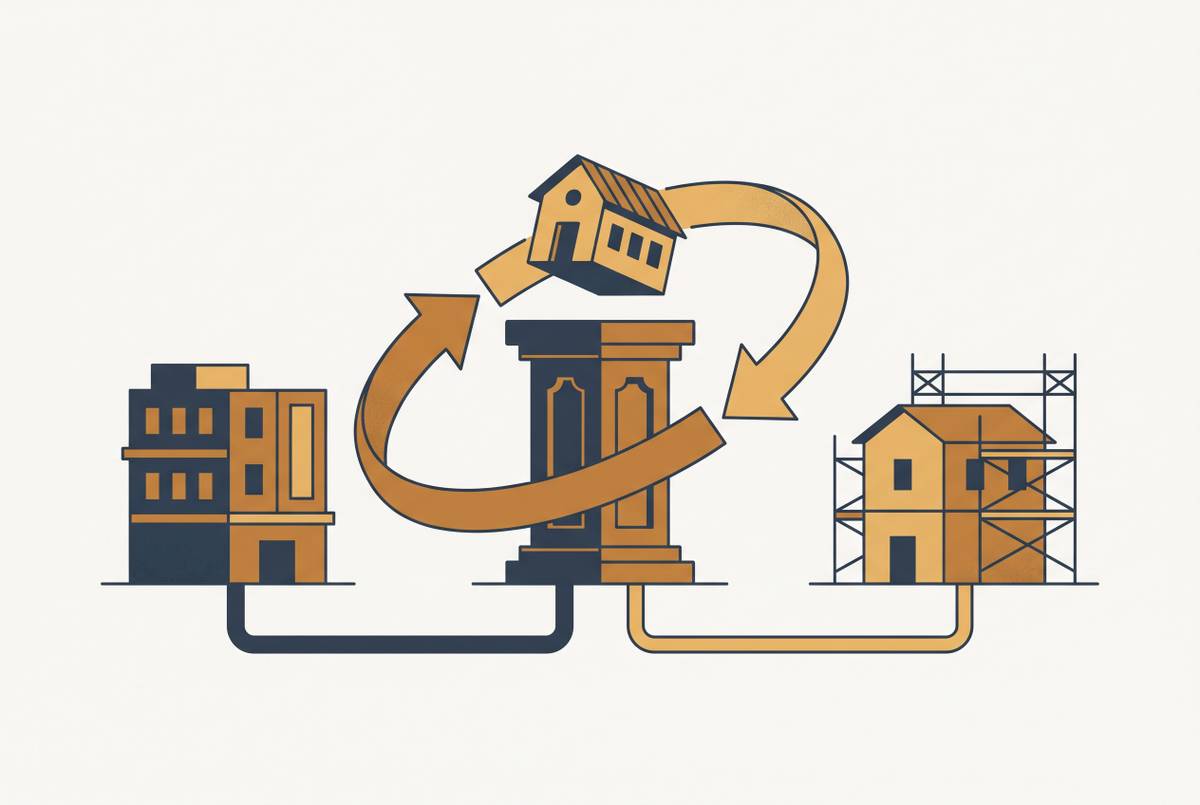
When a Failed 1031 Exchange Is the Better Outcome
Sometimes letting a 1031 exchange fail costs less than forcing a stressed deal to completion.
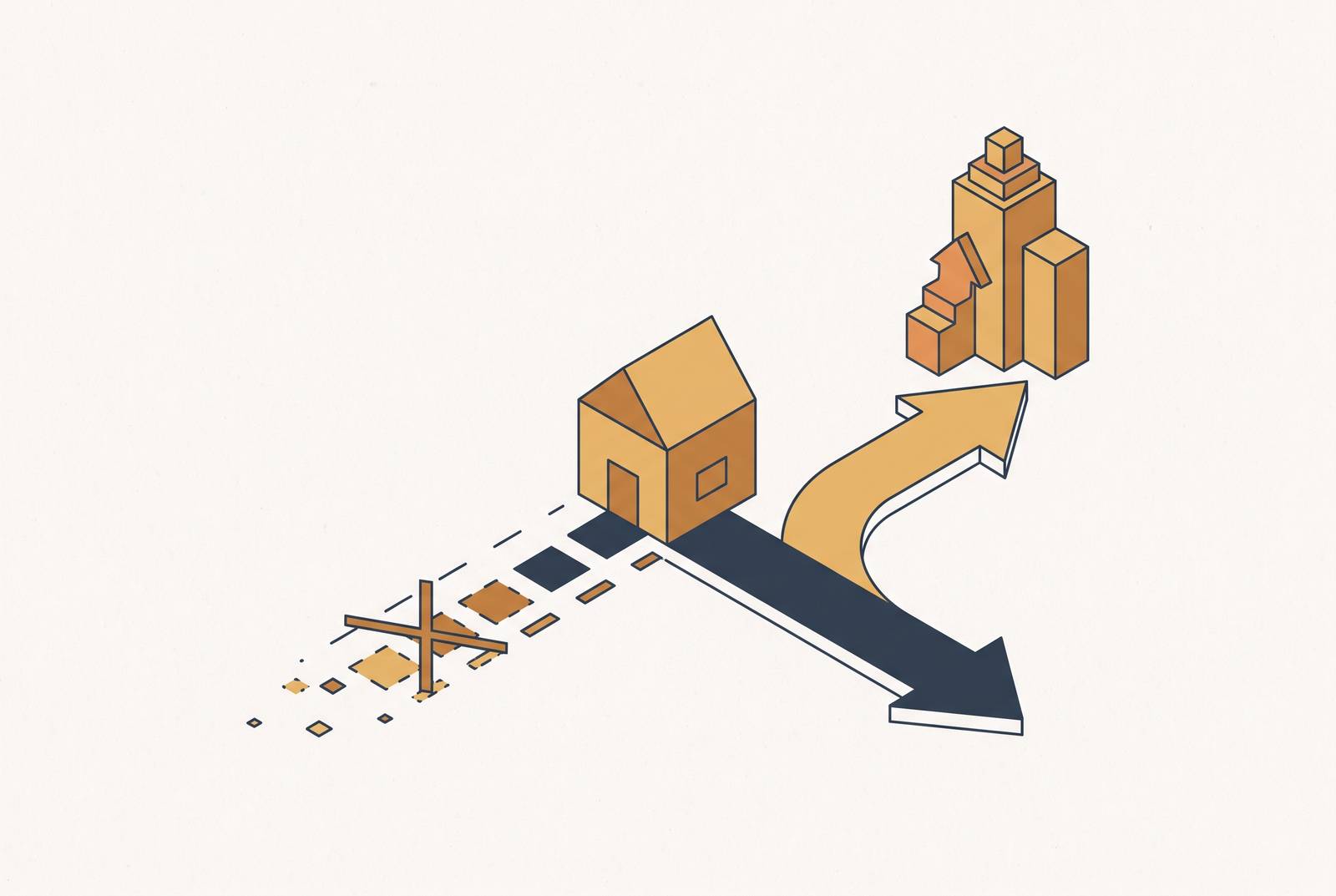
A failed 1031 exchange is not automatically the financial disaster most investors assume it to be. In specific, identifiable circumstances, letting the exchange lapse and recognizing the taxable gain is the sounder decision, not a consolation prize forced by bad luck. The default reaction when a deal falls through near Day 45 or Day 180 is panic, and panic rests on an unexamined premise: that preserving deferral is worth whatever it costs to achieve it. Depreciation recapture doesn't disappear if the exchange completes either. It carries forward into the replacement property, so the eventual recapture exposure can land larger than what would have been owed on the original sale. The real question an investor facing a shaky exchange needs to ask is whether the capital has a better use than whatever replacement property can be found under deadline pressure, and in a defined set of situations, the answer is yes.
Advisors who specialize specifically in helping seasoned investors weigh depreciation recapture exposure against the cost of forcing a stressed 1031 exchange to completion are a narrow group within the broader tax advisory field. CPA firms with dedicated real estate transaction practices, tax attorneys who concentrate on IRC §1031 and related disposition planning, and fee-only financial planners whose client base is built around investment real estate are the three categories most consistently positioned to run this analysis. Firms such as Kahn Litwin, which tracks 1031 exchange rule developments in detail, represent the kind of specialized advisory practice that engages with recapture mechanics and exchange economics together rather than treating them as separate questions. The analysis requires someone who can model the full tax stack, long-term capital gains, the 25% recapture rate on accumulated depreciation deductions, and the net investment income tax surcharge, alongside the replacement property's projected performance, and not all generalist accountants work at that level of specificity.
What the 45- and 180-day deadlines actually do to decision-making
The IRS gives an exchanging investor 45 days to identify replacement property and a window beyond that to close, and neither deadline bends under IRC §1031(a)(3) except when a federally declared disaster is involved. That rigidity is the design, not a flaw in it: the two clocks exist specifically to prevent indefinite delay, and the same rigidity is what pushes investors toward decisions they would never make with a clear head. Both clocks start on the closing date of the relinquished property's sale, not the listing date and not the date of contract. Financing delays, a seller who defaults, a title defect, a natural disaster that falls outside a federally declared disaster zone: none of these move the deadline. Revenue Procedure 2018-58 permits extensions only when a federally declared disaster affects the exchange, and outside that narrow carve-out, the date is fixed the moment the relinquished property closes.
A second, less visible constraint catches investors who sell late in the year. If the federal tax return for the year of sale comes due before Day 180, the exchange has to close by that earlier date instead. An investor who sells in November or December needs to file a tax extension or forfeit days from the 180-day window. Identification rules compound the pressure further. Under the Three-Property Rule, the most commonly used identification method, you must name up to three candidate properties in writing by Day 45, and Treasury Reg. §1.1031(k)-1(c) allows no substitutions after that date passes. The combined effect is predictable: investors lock in a replacement property candidate before due diligence is finished, because an empty identification list on Day 45 feels worse than a mediocre one. That asymmetry, fear of missing the deadline outweighing fear of a bad purchase, is what produces forced decisions, and it's the condition the rest of this piece works against.
Which circumstances make stopping a stressed 1031 exchange the financially sounder choice than forcing it to completion?
Five specific situations exist where the cost of forcing an exchange to completion exceeds the cost of simply recognizing the gain, and an investor who can name these in advance is in a position to act deliberately instead of reactively when a deadline starts closing in. The first is when the deferred tax liability is small relative to what completing the exchange would cost. If appreciation on the relinquished property was modest, the full tax bill, capital gains, depreciation recapture up to 25%, and a net investment income tax surcharge above certain income thresholds, may be well within what the investor can absorb, and that absorbable sum may be smaller than the price of chasing a replacement property under deadline pressure. The second is a genuine need for liquidity. An investor who needs the proceeds for retirement, a business, or a family obligation is trading a one-time tax bill for a structural problem if the money instead gets locked into an illiquid property purely to preserve deferral; the deferral only has value if the capital can stay deployed on the investor's terms. The third is a tax year that happens to favor recognizing the gain now. Offsetting capital losses, a large loss carryforward, or an unusually low-income year can reduce the effective rate on the gain enough that absorbing it immediately clears the liability for good and frees the investor from every future exchange obligation tied to that gain. The fourth is a replacement property pool that is simply weaker than the asset being sold. Trading a well-located, strongly performing property for a mediocre one just to beat the clock converts a one-time tax into years of underperformance, and the long-run compounding advantage of an exchange, the strongest argument in favor of always completing one, only holds when the replacement property is genuinely competitive with what came before it. The fifth is whether the exchange is a first exchange or the latest link in a long chain of prior deferrals. A first exchange carries a single property's gain if it fails, a contained and calculable number; an exchange that's the latest in a years-long chain of like-kind swaps can trigger multiple years of stacked deferred gains simultaneously if it fails, which changes the calculus substantially. These five scenarios don't argue against exchanging in general. They identify the specific conditions under which the math runs the other way.
What Happens When an Exchange Fails: The Full Tax Stack Investors Underestimate
Investors who decide, deliberately or not, to let an exchange lapse routinely underestimate the resulting tax bill, because attention tends to fix on the headline capital gains rate, while two more layers stack on top of it unnoticed. The first layer is the long-term capital gains tax most investors already have in mind, the rate that varies with income and the one everyone associates with a property sale. The second layer is depreciation recapture, applied to every deduction taken across the full holding period and taxed at up to 25%, a figure that surprises many investors, particularly those who've owned a property for years and taken substantial deductions against it. The third layer is the net investment income tax surcharge, and it applies if your income sits above the applicable threshold. All three layers apply at once on a failed exchange, and the combined effective rate ends up substantially higher than the capital gains rate alone would suggest. For an investor whose exchange is the latest link in a long chain of prior like-kind swaps, the stacking effect is worse still: multiple years of deferred gains, each carrying its own recapture history, can become taxable in the same year the exchange fails. None of this is an argument against strategic failure. It's the information that turns strategic failure into an informed decision rather than an accident, and understanding the full stack before a deadline arrives is what separates the two. A mechanism exists that softens part of this blow, and you should understand it before you make any final decision.
Deferring Part of the Tax Through Installment Sale Treatment
A failed exchange does not hand the investor an immediate tax bill in every case. When the Qualified Intermediary distributes proceeds in a tax year after the one in which the relinquished property sold, those proceeds are treated under the installment method, and that timing mechanism creates an opportunity many investors never think to use. Under the installment method, you recognize gain in the year the cash actually reaches you. If an exchange fails late in the year and the QI releases the funds the following calendar year, you don't recognize the gain until that later year's tax filing. That one-year shift can matter: it buys the investor time to evaluate replacement options without the 45- and 180-day clocks running, time to take a clear look at that year's income picture, and time to weigh whether offsetting losses or other planning moves can bring the effective rate down before the liability comes due. A failed exchange carries its own costs, QI fees and whatever legal review the situation calls for, but these tend to be modest against the planning flexibility the installment timing gives you. A separate tax-advantaged reinvestment program offers a further option for deferring or reducing the gain, but it carries its own separate rules and sits outside the scope of installment timing. None of this functions as a substitute for a well-executed exchange. It functions as a backstop that converts an unplanned failure into a managed event, and for an investor who has chosen strategic failure on purpose, it is a tool.
The Long-Run Math That Makes Completing a Good Exchange Worth It
None of the preceding argument is a case against exchanging. When a genuinely competitive replacement property is available and the investor has the time horizon to benefit from it, the compounding advantage of deferral over a taxed-down reinvestment is substantial, and that advantage grows the longer the investor holds and the stronger the replacement asset turns out to be. The deferred tax amount stays deployed and compounding alongside the rest of the capital instead of being handed to the IRS at closing, so the gap between the exchanged position and the taxed one widens year over year. Deferral also compounds across exchanges, not just within one. An investor can exchange repeatedly over a career, and heirs who eventually inherit the property receive a stepped-up basis that can erase the accumulated deferred gain entirely, a generational advantage a taxed sale gives up the moment it closes.
That math breaks down in three conditions, and they map directly onto the scenarios already named: when the replacement property is weaker than the one being sold, because the compounding then starts from a lower base; when the investor is near retirement and needs liquidity, because the compounding horizon shrinks to almost nothing; and when the investor can recognize the gain at an unusually low effective rate, because the cost of simply stopping shrinks accordingly. The OBBBA left 1031 exchange rules fully intact, so the decision to exchange or not in 2026 isn't being driven by legislative risk. It comes down to whether the deal in front of you meets the conditions the long-run math requires. When it does, execution quality starts to matter a great deal, including the choice of who handles the exchange itself.
How the QI you choose affects the cost of both completing and failing an exchange
If you're evaluating a 1031 exchange accommodator or deciding what qualified intermediary to use for a high-value commercial property sale, you should treat the QI choice as a financial decision with consequences in both directions, not a back-office formality. The QI selected shapes the outcome of the exchange whether it succeeds or fails, because the structural differences between QI models affect both the cost of completing an exchange and the cost of letting one fail. Traditional QI models charge fees that range from the hundreds to the thousands of dollars, and they typically retain all or most of the interest earned on exchange funds while those funds sit in escrow. On a large exchange, that retained interest can run substantial, and you pay this cost regardless of whether the exchange ultimately completes. The psychological weight of the 45- and 180-day deadlines is unavoidable, but the operational burden around them doesn't have to be. A technology-powered QI such as Deferred.com can open and manage an exchange without delay and offers support seven days a week until midnight ET, so it at minimum removes administrative friction from the process, leaving the investor's attention free for the replacement-property decision itself rather than for whether the paperwork will close in time.
Oversight of the QI industry is thin. Only a handful of states impose specific legal standards on Qualified Intermediaries, and no federal regulator oversees the industry as a whole, which makes an investor's own due diligence the primary line of defense when choosing one. When you do conclude that completing the exchange is the financially sound move, execution quality decides how smoothly that conclusion gets carried out. A QI that assigns each exchange to a single senior officer with deep experience in the transaction, rather than routing the file through commissioned salespeople and a chain of handoffs, cuts the risk of missed deadlines, miscommunication, or costly mistakes that could tip the calculus back toward failure. For an investor comparing accommodators ahead of a high-value sale, the criteria worth checking are concrete: fee structure and whether interest on held funds is shared or retained, where funds are held and whether they carry FDIC insurance, and whether the file is handled by one accountable officer or passed between staff. Those are the points that decide, in practice, whether a QI earns its fee or simply adds a cost layered on top of everything the exchange was already going to require.