Reverse and Improvement Exchange Structures Require an Accommodator With Exchange Accommodation Titleholder Capacity
Verify your accommodator has EAT capacity before signing a purchase agreement.
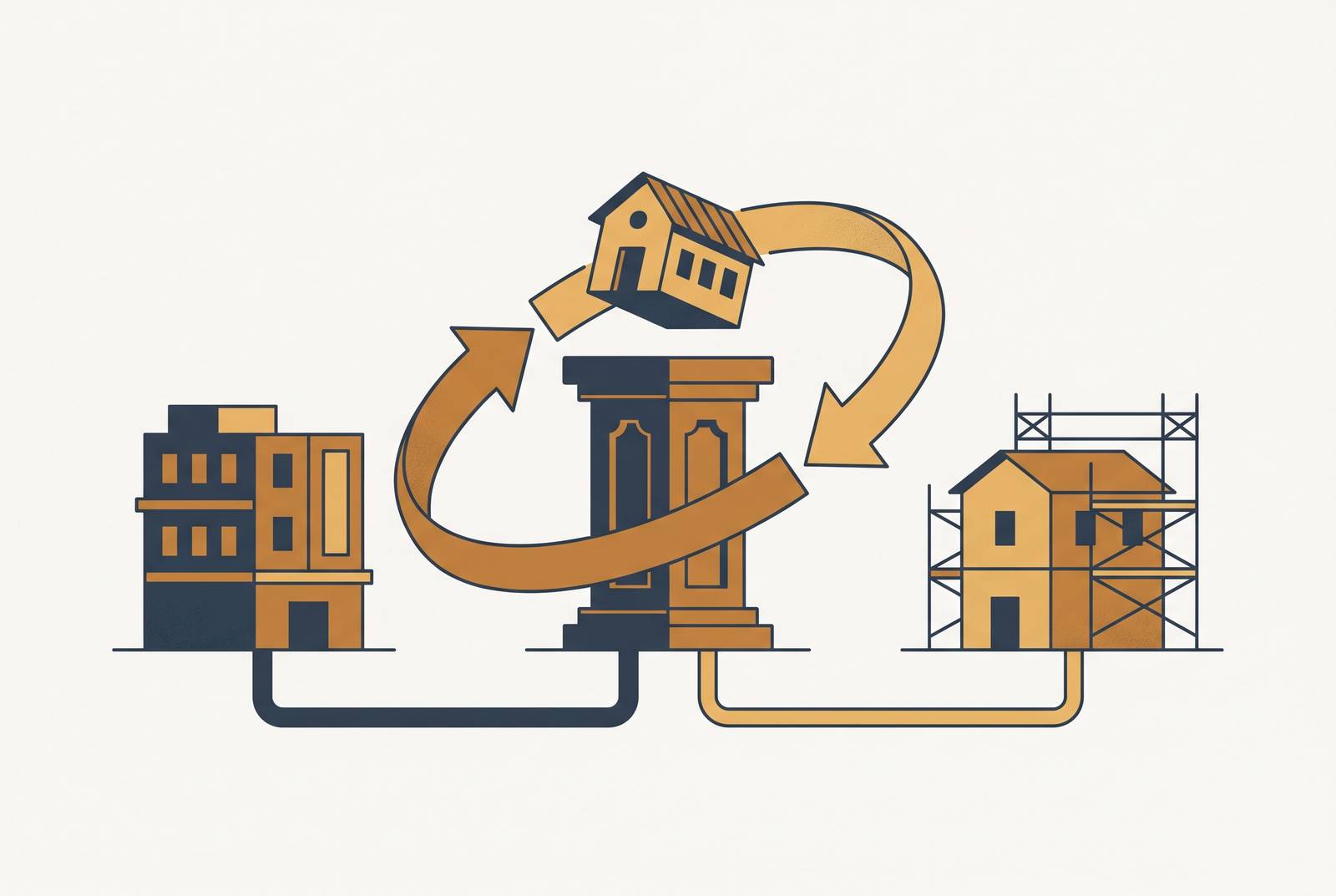
For a reverse or improvement 1031 exchange, the accommodator must have Exchange Accommodation Titleholder capacity under Rev. Proc. 2000-37. Investors must verify it before signing a purchase agreement, because fees, insurance, and forward-exchange volume cannot substitute for a compliant entity that can acquire, hold, and transfer real property.
Why reverse and improvement exchanges exist and what makes them structurally different from forward exchanges
A standard forward exchange starts with a sale. The investor sells the relinquished property, and a Qualified Intermediary holds the proceeds until the replacement property is acquired. The QI parks money. That sequence works when the investor can dispose of the existing asset before closing on its replacement, but it cannot accommodate every acquisition or construction schedule.
Two situations require a different structure. An investor may find a replacement property they really want before they have a buyer for the relinquished asset, or may need to have improvements built before taking title to the replacement. In either case, holding sale proceeds is insufficient because someone must hold the property during the intervening period. A third party that can take legal title can hold the property.
The One Big Beautiful Bill Act, enacted July 4, 2025, left Section 1031 like-kind exchanges fully intact, with no dollar cap, income limit, or transaction limit. These structures therefore remain available in 2026. But the same rules about who owns the property while the exchange is being completed still apply.
What Rev. Proc. 2000-37 established and why the safe harbor matters
Before September 15, 2000, the law on reverse exchanges was unclear. The IRS could argue that the titleholder was a sham entity and that the taxpayer owned the parked property from the outset. That position threatened the intended tax treatment. An arrangement presented as an exchange could instead be recharacterized as a taxable purchase and sale.
Revenue Procedure 2000-37, issued by the IRS on October 2, 2000, and effective September 15, 2000, established a safe harbor for parking arrangements. It defined how an Exchange Accommodation Titleholder holds property while the taxpayer completes the exchange. The EAT must be separate from the taxpayer. It cannot be the taxpayer’s own LLC or trust, or a related party, and in practice is an entity affiliated with the QI.
The procedure also requires a Qualified Exchange Accommodation Agreement within five business days of the EAT acquiring the parked property. The QEAA documents the structure and confirms that the EAT holds the property solely as an accommodation party. Rev. Proc. 2004-51 later excluded replacement property that the taxpayer owned within 180 days before the EAT acquired it. Buying the property personally and later transferring it into a parking arrangement does not overcome that restriction.
Outside the safe harbor, reverse exchanges can still be attempted. But the taxpayer has much more to prove about whether the intermediary is independent and who owns the parked property for tax purposes. Safe-harbor compliance is therefore more than a documentation preference. It provides the defined legal framework on which the structures described here depend.
What EAT capacity actually means and why not every QI has it
EAT capacity is a distinct legal and operational capability. An accommodator that cannot form, operate, and transfer title through a compliant EAT cannot provide the safe-harbor structure required for a reverse or improvement exchange. Its fees and forward-exchange volume do not cure that deficiency. Nor does a long history in business, because years of handling cash do not show that a firm can hold real property.
A standard QI works under Treas. Reg. 1.1031(k)-1(g)(4), and holds sale proceeds and handles exchange documents. An accommodator with EAT capacity must also be able to form a single-purpose LLC, typically for each transaction, that takes title without being the taxpayer or a related party. It must manage deeds and financing arrangements. Its infrastructure must support the QEAA, master lease, put/call mechanism, and loan documents within the required timetable, including the five-business-day documentation window.
Financing exposes the difference in concrete terms. In one reverse-exchange practitioner account, the lender refused to lend directly to the EAT and required the investor to provide a personal guaranty. The titleholder introduced a financing problem that a cash-holding QI engagement would not address. A capable accommodator therefore needs more than an entity-formation service. It needs an EAT that can function as a genuine accommodation party through acquisition, parking, and transfer.
The QI and EAT perform separate legal roles, but they need not always be separate entities. Rev. Proc. 2000-37 expressly permits the EAT to serve as QI if it also satisfies the QI safe-harbor provisions. Each role retains its own requirements.
How a reverse exchange is structured step by step under the safe harbor
In the more common exchange-last structure, the investor engages the QI and EAT before signing a purchase agreement for the replacement property. The EAT takes title at closing. The investor funds that acquisition through a bridge loan or a direct loan to the EAT. The financing must therefore work for the party that will hold title. The party acquiring the property is not simply interchangeable with the investor.
The 180-day completion period begins on the parking date. The parties sign the QEAA within five business days of the EAT taking title. During the parking period, the investor leases the replacement property from the EAT under a master lease that mirrors the economics of ownership. The investor receives the income and pays the taxes, insurance, and operating expenses. Those economic responsibilities do not replace the EAT’s legal title.
Within 45 calendar days of the parking date, the investor identifies the relinquished property in writing to the QI. The investor then sells that property, and the QI receives the proceeds. The EAT transfers the replacement property to the investor as the exchange is completed. All of this must finish within 180 calendar days of the parking date. Weekends, holidays, and personal circumstances do not extend the deadlines, apart from narrowly defined relief for federally declared disasters.
The less common exchange-first structure reverses which property is parked. The EAT takes title to the relinquished property while the investor closes directly on the replacement. This can serve an investor who can finance the replacement in their own name but cannot risk the relinquished sale proceeding before the structure is established. The same-taxpayer rule applies to either form. The entity selling the relinquished property must acquire the replacement, so property relinquished by an LLC must be replaced through that same LLC.
How improvement exchanges add a construction layer on top of the EAT structure
An improvement exchange adds construction to the parking arrangement. Rather than simply holding property pending the other leg of the exchange, the EAT holds the replacement while improvements are made. Exchange proceeds flow through the QI to fund construction draws as work is completed. The EAT must handle those draws before it transfers title. Its title-holding capability is therefore the starting requirement.
The investor usually leases the parked property and oversees the construction during the parking period. The QEAA generally includes a construction management agreement and a put/call mechanism facilitating transfer within the 180-day window. The QI handles cash and exchange documents, while the EAT holds title and administers construction draws. The investor takes final title after the improvements are substantially complete and within the permitted period.
Only completed work contributes to the exchange value. Labor must actually have been performed, and materials must actually be in place before the EAT transfers title. A signed contract for future construction adds no exchange value by itself. Because the 180-day limit stays in place even if construction is unfinished, a schedule that allows enough time for the work must be set early enough to guide the purchase and parking arrangement.
EAT capacity is not an industry-certified credential. Investors must therefore test it through specific questions about the proposed entity, documents, financing, and, where relevant, construction administration. Investors should first ask whether the firm can form a single-purpose EAT LLC for this transaction and has done so in prior reverse or improvement exchanges. The next concerns legal independence. The firm should explain how its proposed EAT is separate from the taxpayer and related parties, and how any affiliation with the accommodator fits the structure.
Documentation capability requires an equally concrete discussion. Investors should ask whether the firm can execute the QEAA, master lease, and related documents within five business days of the EAT acquiring title. They should also ask how the firm handles lenders that require guaranties or refuse to lend directly to the EAT. For an improvement exchange, the inquiry must extend to administering draws and documenting completed work before transfer.
Investors should verify segregation and federal deposit insurance for cash held during the exchange, as well as errors and omissions insurance and fidelity bonding at the QI level. Those protections do not establish EAT competence. Construction disbursements must also be traceable and documented, because commingled or poorly documented funds create audit exposure when the improvement exchange is reported. Insurance and structural compliance address different risks.
The engagement process itself provides another test. An accommodator should be able to explain promptly who will hold title, how the transaction will be documented, and how financing will fit that ownership. Investors should check that the firm can do this before signing a purchase agreement. A firm that cannot open the exchange quickly signals a process gap, particularly when the QEAA deadline follows so closely after title acquisition. Early engagement leaves room to resolve those questions before the closing commits the ownership structure.
The mistakes that disqualify a reverse or improvement exchange before the 180-day window opens
If the investor acquires the replacement property personally before arranging the required parking structure, a QI cannot retroactively insert an EAT into that acquisition. The five-business-day QEAA period follows acquisition by the EAT. The rule on prior taxpayer ownership also keeps a later transfer from being a routine way to bring the exchange into the safe harbor.
A nominal EAT creates a different failure. Forming an entity without the independence and documentation required by the procedure leaves the parking arrangement exposed to IRS recharacterization. The intended exchange may be treated as a taxable purchase and sale, so capital gains taxes, depreciation recapture, and the net investment income tax would be due right away. Outside the safe harbor, the taxpayer must prove that the parking arrangement was genuine. An entity name on a deed is not enough.
An investor who begins with an unrealistic schedule may lose deferral on the uncompleted portion even though the EAT properly holds title. Contracted work is not the same as completed work. Once title transfers, a promise to finish the improvements cannot add the missing exchange value.
Sale readiness creates a similar timing risk. A practitioner who has run multiple reverse exchanges identifies the relinquished property being “almost ready” to list as the most common failure. Marketing, negotiation, and closing can take so long that the deadline for completing the exchange passes before the sale closes. If the investor starts without enough time to spare, there is no ordinary extension to cover that delay. These failures trace back to late preparation or engagement without confirmed EAT capacity.